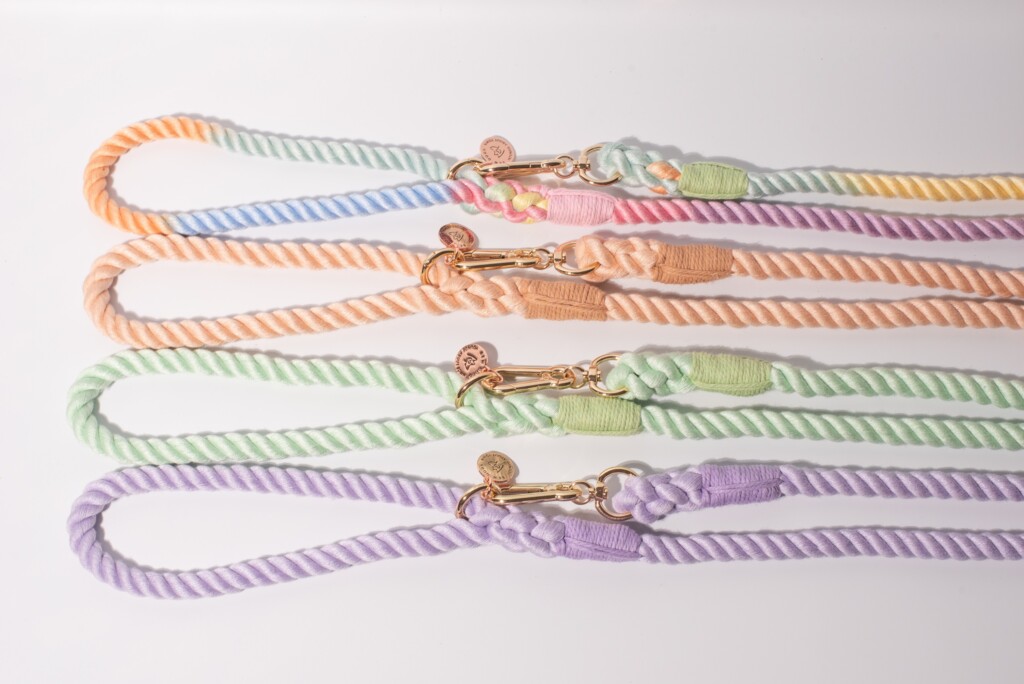
Choosing the right lead can make walks safer, more comfortable, and more enjoyable for both you and your dog. At Bew Dogs, we offer both rope leadsand fabric leads designed with comfort, durability, and style in mind.
What Are Rope Leads?
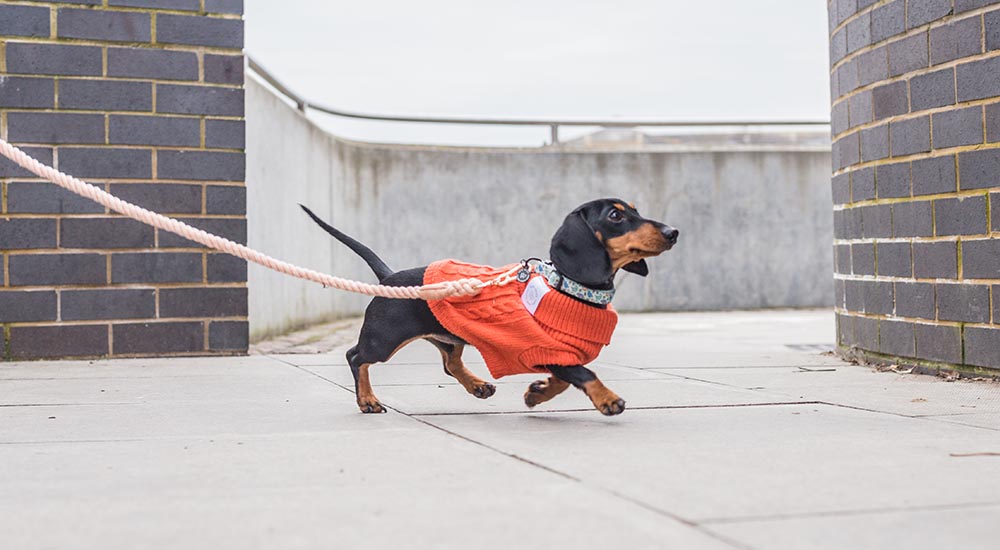
Rope leads are made from durable, braided materials and are strong yet lightweight. They’re perfect for everyday walks and casual outings.
Key features:
Suitable for dogs of all sizes
Comfortable grip for owners
Strong hardware, safe for larger dogs
Ideal for everyday walks, park trips, and town strolls
Best for:
Owners who want a lightweight, durable, stylish lead
Owners that want a curated set with leads complimenting other dog walking essentials
Not suitable for:
Heavy no-pull training
Technical behavioural or control situations
What Are Fabric Leads?
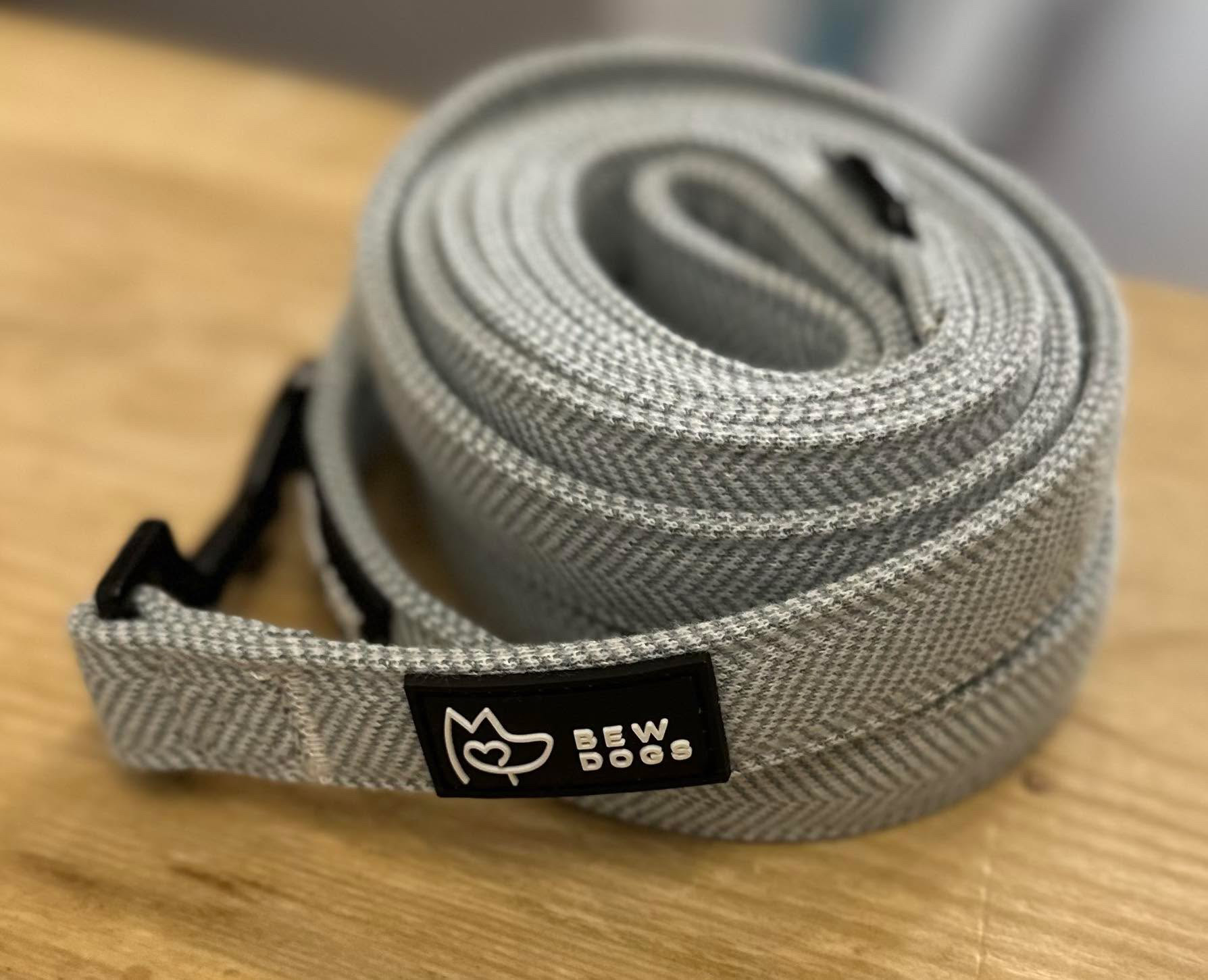
Fabric leads are typically made from woven cotton, nylon, or recycled materials, often with padded handles. They offer soft comfort for your dog and are often eco-conscious.
Key features:
Comfortable for long walks
Variety of colours and patterns
Strong enough for most small to medium, and some larger, dogs
Eco-conscious, thoughtfully packaged
Best for:
Very small dogs, if a rope lead feels too bulky
Owners who want a stylish, comfortable lead
Small to medium dogs on everyday walks
Not suitable for:
Large dogs that pull strongly
Heavy training or behavioural correction
How They Compare
Material
Rope leads: Braided and strong
Fabric leads: Soft woven or recycled material
Comfort & Handling
Rope leads: Lightweight, easy grip
Fabric leads: Soft, cushioned for long walks
Size suitability
Rope leads: All sizes, including larger dogs
Fabric leads: Best for small to medium dogs
Use Case / Best For
Rope leads: Everyday walks, durable and weather-resistant
Fabric leads: Comfortable, stylish, thoughtfully designed
Training Use
Rope leads: For everyday training. Not for no-pull or behavioural training
Fabric leads: For everyday training. Not for no-pull or behavioural training
How to Choose the Right Lead
Consider your dog’s size and strength — larger dogs may benefit more from rope leads with reinforced hardware.
Think about your walking style — long, leisurely walks may be more comfortable with fabric leads.
Prioritise eco-conscious materials — many fabric leads are packaged responsibly and sustainably.
Check durability — rope leads are extremely durable, perfect for frequent outdoor walks.
Our Recommendations
All Bew Dogs leads are thoughtfully made with durable, high-quality materials for comfortable, everyday walks. They:
Suit dogs of all sizes (with guidance on strength for larger dogs)
Feature strong, secure hardware
Are easy to use, stylish, and responsibly packaged
Are machine washable (on a low temperature)
Final Thoughts
Rope leads: Durable, versatile, great for everyday walks
Fabric leads: Soft, stylish, eco-conscious
By considering your dog’s size, behaviour, and your walking habits, you can pick the lead that will make every walk enjoyable.
Explore our full range of rope leads and fabric leads to find the perfect fit for your dog today.
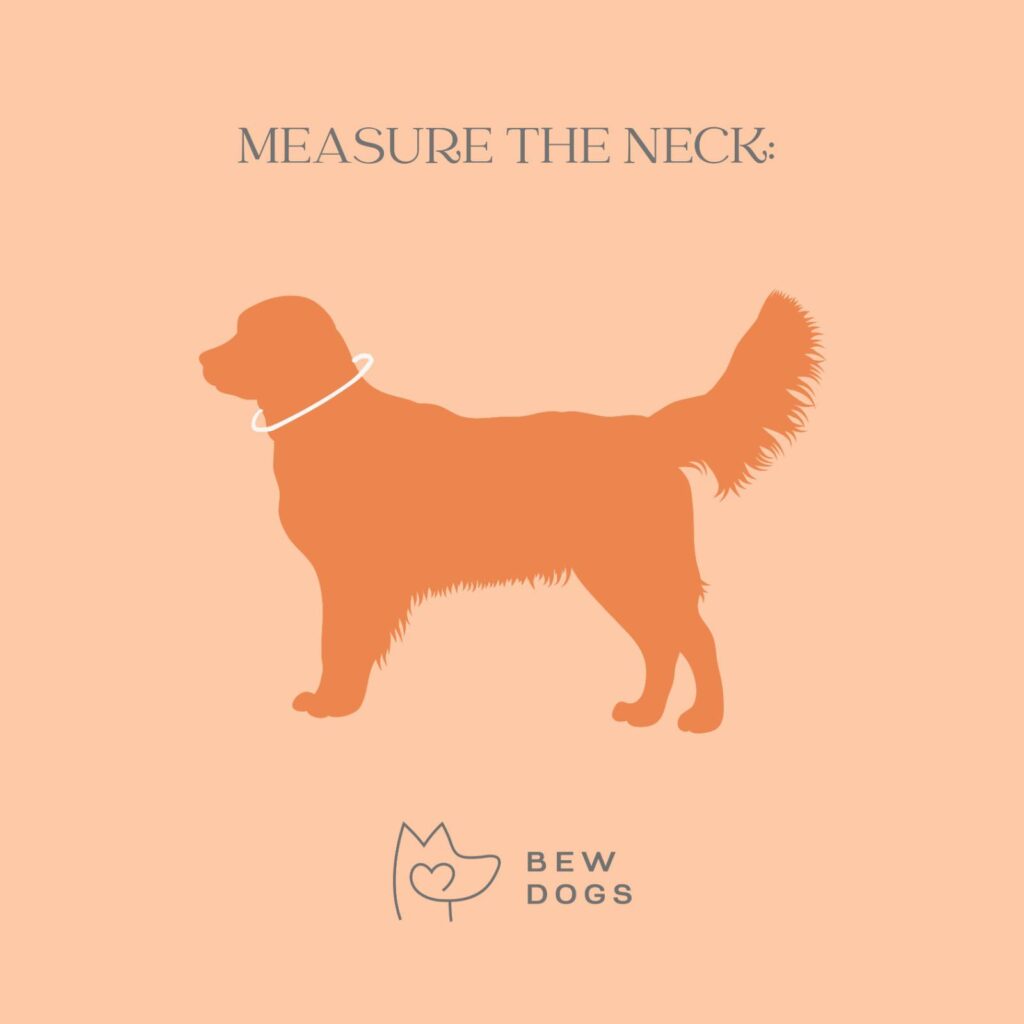
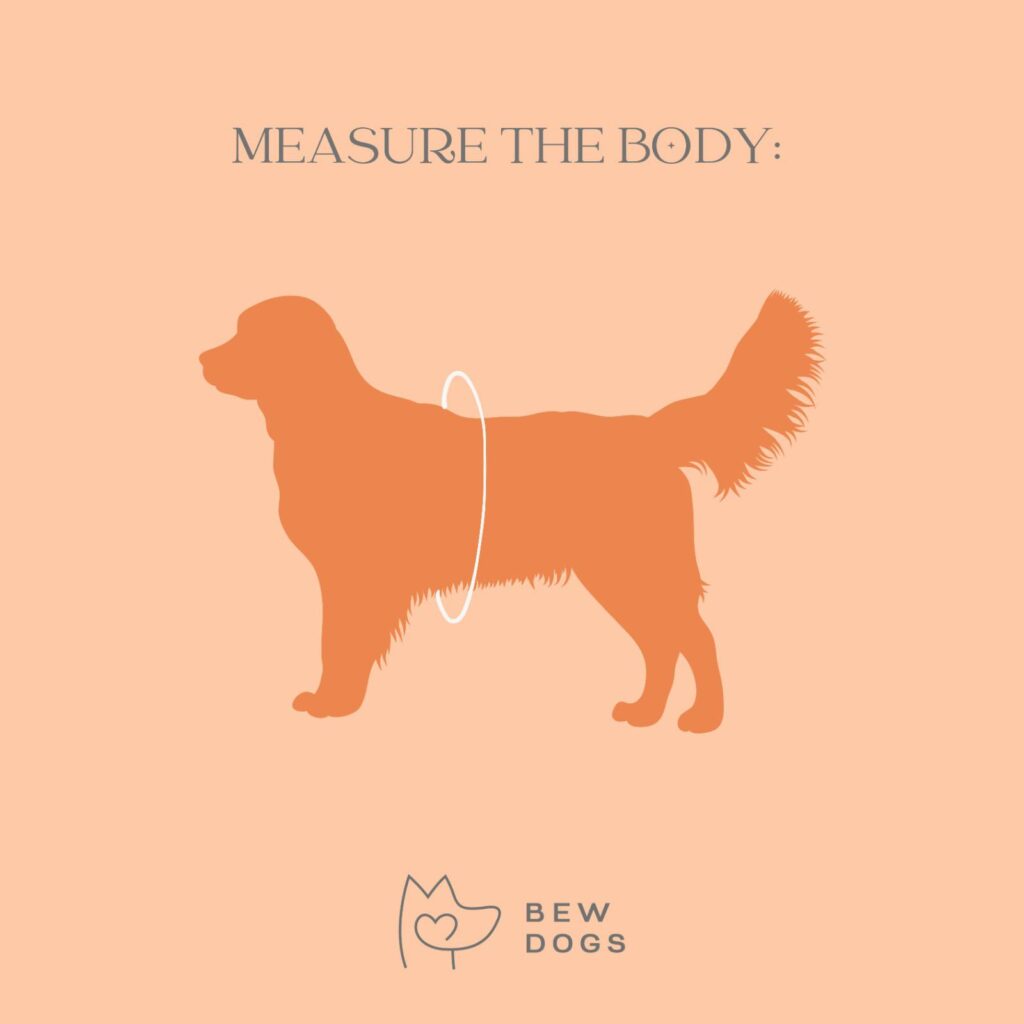
To accurately measure your dog for a harness, start by preparing a quiet and distraction-free area. Guarantee your dog is relaxed and calm. Measure the neck circumference and the widest part of the chest, usually just behind the front legs.
Keep the tape snug but not too tight and leave room for two fingers to fit between the tape and your dog’s body. Once you have your measurements, consult the product size guide and make sure you determine the correct harness size that aligns correctly with your dog’s body.
If you follow these steps, you’ll be well on your way to finding the perfect harness for your dog.
How to Measure a Dog for a Harness – Bew Dogs’ Quick Take
You can measure a dog for a harness by using a flexible tape measure. Measure around the widest part of the chest and the base of the neck for accurate sizing.
Key Takeaways
• Find the perfect sized harness with two simple measurements!
• Measure the dog’s neck circumference in centimetres, ensuring a snug fit with a tape measure.
• Measure the widest part of the chest to find the correct size, allowing the dog to relax and move freely.
• Take measurements during the dog’s calmest time of day, in a quiet and cozy spot for accurate readings.
• Use the two-finger rule to ensure a comfortable and secure fit, with enough room for two fingers between the harness and the dog’s body.
• If your pooch is between sizes, we’d normally recommend going for the larger of the two, however, this depends on the breed and age of dog etc. DO SEND US A MESSAGE with your measurements and we’ll use our expertise to advise the correct sized harness for your dog.
Preparing to Measure Your Dog
When it comes to measuring your dog for a harness, setting up the right conditions is important. You should pick a spot in your home where your dog feels at ease, away from noise and distractions, and at a time of day when they’re likely to be calm.
For more detailed advice, check out our guide on choosing a dog harness to ensure you find the best fit for your furry friend.
Additionally, making sure your dog is relaxed and comfortable during the measurement process is key. Using a fabric tape measure ensures accurate and snug measurements for selecting the correct harness size.
Choose a comfortable and quiet location
Before you start measuring your dog for a harness, choose a quiet and cozy location that allows your dog to feel relaxed and move freely.
Pick a familiar spot, away from distractions, to help your dog unwind. This guarantees precise measurements and a correct harness fit that will enhance your dog’s comfort and safety.
Select the right time of day for measurement
Measure your dog during a time of day when they’re typically most calm and relaxed. This guarantees accurate measurements and a stress-free experience for both you and your dog.
Consider the following:
• Avoid measuring your dog after exercise or playtime, as they may be too energetic.
• Measure your dog after a walk or meal, when they tend to be more relaxed.
• If your dog is easily excitable, measure them during a quiet morning or evening period.
Ensure your dog is relaxed and calm
Give your dog the chance to move away if they become uncomfortable during the measurement process. Enlist a buddy to distract them or offer treats to help them relax.
This guarantees a comfortable fit, making it easier to measure their neck circumference and chest circumference accurately. Adjusting the harness later will be a breeze with a relaxed dog.
Taking Measurements for Harness
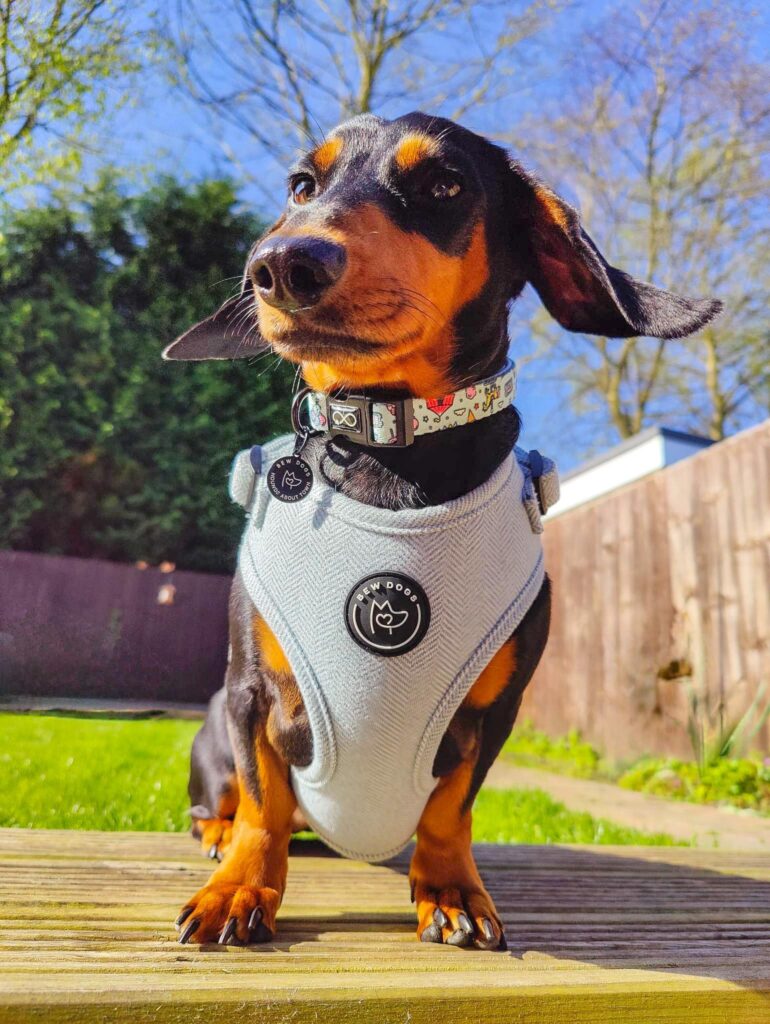
We’ve been able to help customers with more difficult to fit breeds due to their natural body shape, such as dachshunds, French Bulldogs, Pugs and Toy breeds. So, whether you’re looking for a harness for a cockapoo, Chihuahua or a Chow Chow… just use our guide below to find the perfect sized harness from Bew Dogs.
Now it’s time to take your dog’s measurements, including the dog’s chest size.
Using a fabric tape measure ensures accurate and snug measurements for selecting the correct harness size. You’ll need to measure around their neck and the widest part of their chest, to guarantee a perfect fit: two simple steps!
Measure around the dog’s neck with a tape measure
When it comes to measuring your dog for a harness, the neck measurement is an important part of securing a comfortable and safe fit. Wrap the flexible measuring tape snugly around your dog’s neck, positioning it at the base of the neck, just behind the ears, to guarantee a precise measurement.
This measurement is vital to selecting the right harness size for your furry friend.
• Accurate Placement: Ensure the tape is positioned right behind the ears for the most precise measurement.
• Two-Finger Rule: Leave space for two fingers between the tape and your dog’s skin to prevent discomfort.
• Record the Measurement: Note the measurement in centimeters to precisely determine the size of your dog’s neck.
Measure around the widest part of the dog’s chest
You’ll measure your dog’s chest circumference by wrapping a measuring tape around the widest part of their torso, which is typically just behind their front legs (depending on the breed).
The tape should be snug but not tight, allowing two fingers between it and your dog’s body.
This guarantees a comfortable and precise measurement of your dog’s chest size, which is crucial for proper harness sizing.
Understanding Dog Harness Types
When choosing a harness, you’ll encounter different types, each with its own unique features. You’ll need to decide between front clip harnesses and back clip harnesses, which differ in where the lead attachment is located.
Different dog breeds may require different harness sizes based on their specific body proportions – and luckily, our adjustable harnesses and range of sizes mean we have been able to help hundreds of difficult to size dogs, getting the perfect fit!
Front clip harnesses and back clip harnesses
Front clip harnesses feature the leash attachment on the dog’s chest area, while back clip harnesses have the leash attachment on the dog’s back.
Here are some points to bear in mind:
• Front clip harnesses help reduce pulling by tugging the dog sideways when they pull.
• Back clip harnesses can be more comfortable but may trigger the dog’s oppositional reflex.
• Adjusting both types correctly is essential for a safe and comfortable fit.
Fitting and Adjusting Harness
Thankfully, Bew Dogs harnesses are not only stylish but also ultra-adjustable… both the body and neck can be adjusted to the perfect size, ensuring maximum support for your precious pooch.
Our harnesses are also slightly padded for the highest levels of comfort for your best friend and come in sizes XXS to Large, and can cater for most size and breed of dogs, including toy breeds and puppies.
Now that you’ve selected the right harness size, it’s time to put it on your dog and harness adjust the straps for a comfortable fit.
You’ll want to check the tightness and comfort of the harness, making sure it’s not too loose or too snug.
Put the harness on your dog and adjust the straps
To guarantee the harness fits snugly and comfortably on your dog, carefully position the back piece along their back, making sure it doesn’t slide or rotate excessively.
Adjust the harness straps ensuring they fit comfortably without constricting your dog.
Implement the two-finger rule around the neck and chest to avoid tightness.
Check the tightness and comfort of the harness
Guarantee that the harness fits snugly without being too restrictive or loose so your dog can move comfortably without the risk of the harness shifting or slipping off.
Check the tightness and comfort by leaving enough space for your dog to fit two fingers between the harness and their body.
Make adjustments as necessary to secure a comfortable fit.
Ensure a proper fit to prevent escape or discomfort
Proper fitting is crucial to guarantee your dog remains securely and comfortably in their harness, safeguarding them from both short and long-term health issues.
Follow these steps to ensure a proper fit:
• Use the Two-Finger Rule: Make sure that you can fit two fingers comfortably between the harness and your dog, indicating a snug yet comfortable fit.
• Adjust Straps: Regularly adjust the straps to accommodate changes in your dog’s size or shape, ensuring the harness remains secure and comfortable.
• Regular Check-Ups: Conduct regular check-ups to verify that the harness remains in good condition and continues to fit your dog properly.
Troubleshooting and Final Check
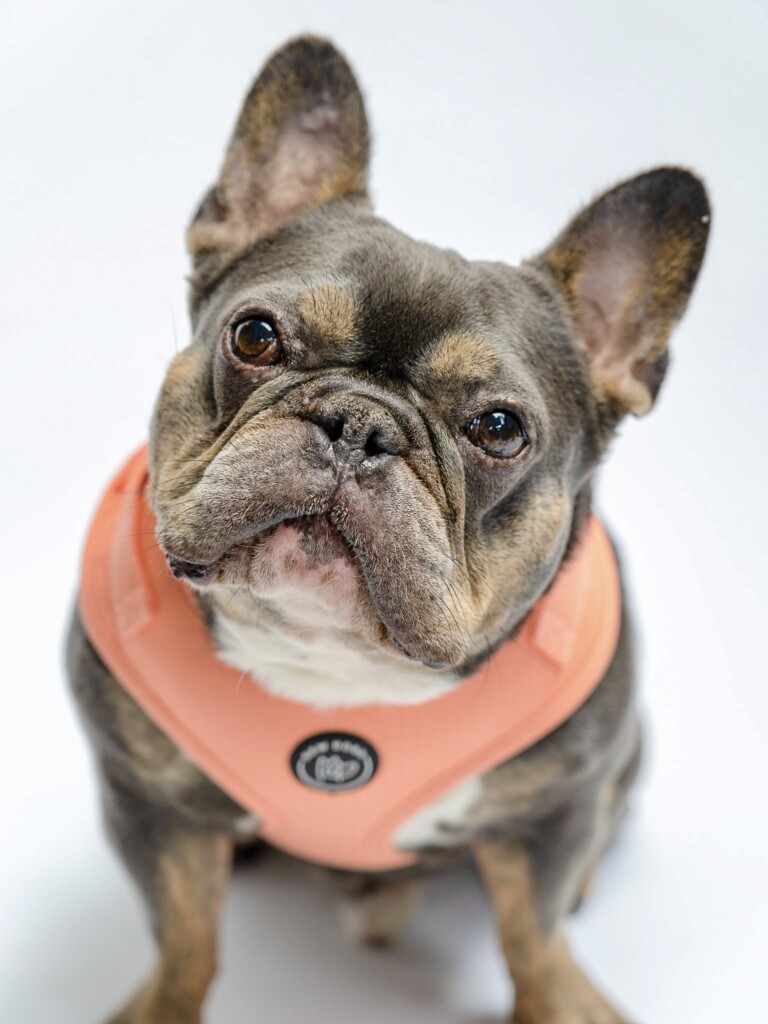
Peach Orange Harness
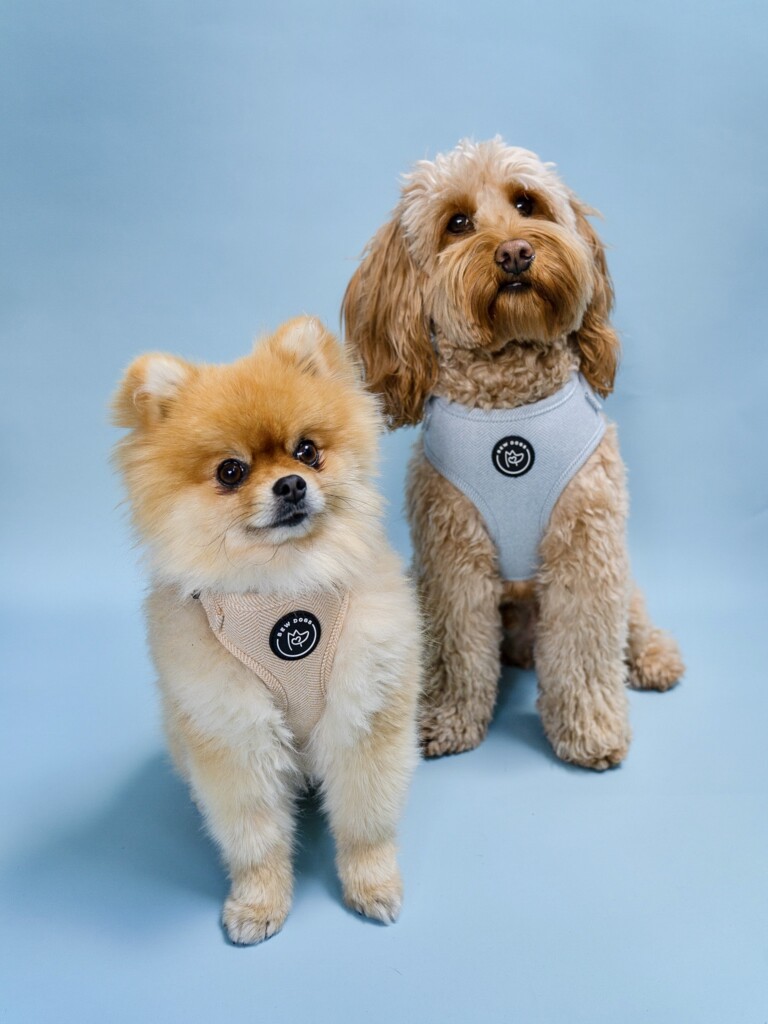
Cream and blue harnesses
Now that you’ve fitted and adjusted your dog’s harness to the correct size, it’s crucial to troubleshoot any potential issues and make final checks.
If your dog attempts to back out of the harness, you’ll need to adjust it to prevent escape.
What if the dog tries to back out of the harness?
If your dog tries to back out of the harness, avoid pulling the leash entirely, as this could lead to accidents or more discomfort for your pet.
Check the fit of the harness to guarantee it’s not too loose or too tight.
Adjust the straps to provide a snug, comfortable fit.
Consider a different harness style or size if the issue persists.
How to troubleshoot a harness that doesn’t fit
When your dog’s harness doesn’t fit quite right, you need to identify and fix the issue to prevent discomfort and potential health problems.
Check for a proper fit, ensuring the harness adheres to the two-finger rule around the neck and chest.
Verify proper positioning, ensuring the back piece rests along the dog’s back without sliding or rotating.
Double-check the fit and make adjustments as needed
All signs of a poor fit must be addressed, guaranteeing that the harness doesn’t slide out of position. Adjust the straps as needed to achieve a comfortable and secure fit.
Make regular checks of your dog’s harness to confirm it remains a proper fit. Adjust the straps if your dog gains or loses weight. Update measurements as your dog grows or changes shape.
Has your puppy outgrown their harness? Check out our recycling programme today!
At Bew Dogs, we believe that luxury dog accessories should be accessible, stylish, and sustainable. As a UK-based brand, we’re dedicated to creating high-quality, affordable dog essentials that not only make your pup look fabulous but also help protect the planet. That’s why we’re excited to introduce our brand-new Puppy Product Recycling Programme, designed to support both your puppy’s growth and the environment, and giving you amazing discounts on your new pup’s pawdrobe!
When your pup outgrows their Bew Dogs harness, simply return it to us for recycling and we’ll give you a pawsome 50% off any replacement harness in a larger size… win win!
Conclusion
Remember, sizes between different dog harnesses do vary, so a dog that is a small in an existing harness will not always necessarily be a small in a Bew Dogs harness, so it’s always best to double check.
It is also important to regularly check and adjust your new harness as your dog grows, or if they gain or lose some weight, to ensure a proper fit and for their safety.
With a well-fitting harness, you’ve secured your dog’s comfort, safety, and happiness.
You’ve done your job, and your furry friend will thank you for it.
If you have any further questions or need any help, please do reach out to us at: [email protected] or through our Instagram or Facebook pages, and we’ll be more than happy to help!
Frequently Asked Questions
What Tools Are Necessary to Measure a Dog’s Harness Size?
To measure your dog’s harness size, you’ll need a few tools: a flexible measuring tape, paper and pen for recording measurements, and optional treats or toys to keep your dog calm during the process.
How Can I Ensure Accurate Measurements if My Dog Won’t Stand Still?
To guarantee accurate measurements, enlist a helper to hold your dog while you measure. Use soft measuring tape or twine to get a snug but not tight fit. Measure three times to compensate for movement.
Can I Use My Dog’s Collar Size to Determine Their Harness Size?
Your dog’s collar size doesn’t directly translate to harness size. Different styles and brands have varying fits, so measuring your dog’s chest girth and neck circumference guarantees an accurate and comfortable fit.
Will One Brand’s Harness Size Be Consistent With Another Brand’s Harness Size?
No, one brand’s harness size will not be consistent with another brand’s harness size. Measurements are brand-specific, so you must take your dog’s measurements and check each manufacturer’s sizing chart to guarantee the best fit.
Can a Harness Be Too Loose or Too Tight?
Yes, a harness can be too loose, allowing your dog to slip out, or too tight, causing discomfort or even health problems. Guarantee a snug fit by leaving room for two fingers between the harness and your dog’s body.

 Our Products




 Home
Home